MALAGA GAZETTE

Monday, July 14, 2014

Khadija Khadija Fajry, an immigrant entrepreneur bringing argan oil to the United States. Photograph: Nina Roberts Little brown bottles filled with Moroccan argan and prickly pear seed oil dot Khadija Fajry’s table at a Long Island City street fair in the multiethnic enclave of Queens, New York. Her business, Kenza International Beauty, is one stand among many. Italian ice, drunk with sweet syrup, is scooped out nearby and neighborhood establishments perform all around – from Irish folk dancing children to CrossFit gym rats, a group of muscular women wearing tiny shorts (some in high heel sneakers), who dramatically hoist barbells above their heads. Wearing a long red silky blouse over crisp white pants, Fajry greets prospective customers warmly, and is soon massaging samples of her oils into the back of their hands or into the dry frizzy ends of their hair. Her own hefty mass of dark curls shimmer in the sunlight from the day’s excess oil she’s wiped into her hair. Cosmetic oils might conjure up images of a blindingly slick face or grease-stained pillows for those accustomed to creams, but pure argan and prickly pear seed oil are absorbed within seconds, says Fajry. “It’s literally food for your skin and your hair,” says Fajry in a vaguely French accent; she notes the oils are loaded with vitamin E and fatty acids. Kenza’s 1-2oz bottles of oils sell for $30 to $77. Fajry founded Kenza in 2012 as an internet business that sells 100% USDA organic Moroccan oils. Fajry had moved to the US to be with her husband in 2000, then began noticing Moroccan argan oil beauty products flooding New York City stores and cosmetics websites. “People got crazy over it. And when you see the product, there is nothing to get crazy about,” says Fajry flatly, “this is crap.” Products were either mixed with chemicals or of low quality, easy to spot because the oil is slimy. She took it personally. argan nuts Argan nuts must be cracked open by hand with two stones to get the kernel. Photograph: Nina Roberts “When you look at the ingredients,” says Fajry singling out Moroccan Oil, the wildly popular hair product line that uses argan oil, “it’s really sick.” Moroccan Oil Treatment oil is one of the most popular products, but its devout following could have silken tresses not from hydration but because of its first its two ingredients, cyclomethicone and dimethicone, which are forms of silicone. Fajry also noticed an business opportunity because no one was selling prickly pear seed oil, an exquisite cosmetic oil popular in Morocco, now hot in Europe. “I thought, ‘I have to do something, I’m Moroccan,’” recalls Fajry. “I have to bring them the real thing.” Finding pure, high-quality wholesale Moroccan oils and a trustworthy supplier is challenging. The oils are expensive because the process is labor intensive. Prickly pear seed oil is made from Moroccan cactus fruit seeds. Argan oil, cosmetic or culinary, is made from the kernel found inside the argan tree fruit, native to south-west Morocco, primarily a Berber region. The fruit is inedible except for goats who climb the gnarly tree branches to eat them. Women crack open the argan nut between stones to extract the kernel, which is then cold pressed. European cosmetic companies began buying argan oil in the 1980s, and it’s now a big business. Fajry likens the industry to a gold rush, in which scams and fakes are plentiful. Sellers might mix sunflower seed oil with argan or make it in an unsanitary kitchen, and if argan oil has a bouquet of goat, it’s been made with the argan kernels taken from goats’ excrement after snacking on the fruits. Fajry found supplier Said Azbane of the Casablanca based Les Labaratories Azbane, a large family-run cosmetics company. Madina , Fez, Morocco Prickly pear seed oil is made from Moroccan cactus fruit seeds. Photograph: Tips Images/Alamy Said Azbane is a tall skinny man with closely cropped graying hair and long lashes. His family is Berber and comes from the argan forest region. His interest in regulating the quality and labor practices of the argan oil business is both business and personal. “We don’t have gas, we don’t have energy,” explains Azbane of Morocco, “we have only our people and our natural resources. We have so many aromatic plants and argan oil, which is only found in Morocco.” After hearing rumors about possible argan tree plantings in Israel and Mexico, Azbane helped register argan oil as a Protected Geographical Indication (PGI) the first in all of Africa. The designation ensures various foods originate from a specific region. “I wanted to get the highest quality that is certified, verified, everything!” says Fajry, noting he had all the correct certifications. He was reluctant to work with a tiny startup, but he recognized her sincerity and liked that she was Moroccan. Moroccan Oil, by contrast, was founded by no Moroccans; their products are produced in Israel and the company is headquartered in the US, as is the company of American model Josie Maran, who created an argan oil makeup line that sells at cosmetics superchain Sephora. Moroccan oils have a built-in socially responsible business structure that appealed to Fajry. For more than a decade, oils have been made in female-owned and run co-operatives, funded in part by foreign and domestic governments, NGO’s, and grants. The co-operatives are designed to give poor women in remote regions who are uneducated, even illiterate, financial independence. However some co-operatives are legitimately female-run and -owned; others are not. “Sketchy” is how Ainslie Koopmans, the co-founder of the Vancouver, Canada based argan oil company Saadia Organics describes the co-operatives, which are popular with photograph-taking tourists. Over a two-week visit, Koopmans found only one authentic female owned and run co-operative. The others had men roaming around, which to Koopmans was a bad sign. “Men will very proudly tell you about how strong their capitalist structure is,” reports Koopmans. “And how – we say exploiting – but there, they say how well their women are working for them. It’s a real source of pride. If you were to talk like that here, you’d have women picketing outside your shop!” exclaimed Koopmans, “They don’t get that that’s not a thing to be proud of.” Ourika river at Tnine with snow capped Atlas Mountains, which line south-western Morocco. Ourika river at Tnine with snow capped Atlas Mountains, which line south-western Morocco. Photograph: AA World Travel Library/Alamy Fajry buys her oil from legitimate female-owned and -run co-operatives. She also says she donates 10% of her sales to two New York City non-profits, the New York Women’s Foundation and Turning Point, which focuses on helping Muslim women and children. Integrating into American culture as an adult was easy for Fajry, now 44-years-old, compared to French culture as a child. Her family immigrated to Istres, a small town in southern France, because her father found work painting bridges and other structures. Typical of many immigrant kids who quickly learn the new language, she was soon in a leadership role, taking care of family paperwork and doctor visits. Although traumatizing at the time, Fajry credits her first immigration to making her adaptable and fearless. She was encouraged to get an education by her parents; her father has never learned to read or write because he had to work as a child. A socially responsible business is important to Fajry, even if she makes the tiniest contribution. “You can have all the money, and not be happy,” says Fajry. She grew up seeing her parents, who were not wealthy, help relatives in Morocco when they visited over summers. “It is so satisfying to see you can do that,” says Fajry. Fajry was thrilled to make a profit in her first year of business, which she attributes to low overhead. She works out of her apartment and Kenza’s only marketing is Fajry’s vigorous social media. Her goal is to eventually sell high-quality products that financially benefit women from all over the globe. And always ready for adventure, she says, “I can feel another immigration coming!”

Posted On Monday, July 14, 2014 0 comments

Khadija
Khadija Fajry, an immigrant entrepreneur bringing argan oil to the United States. Photograph: Nina Roberts


Little brown bottles filled with Moroccan argan and prickly pear seed oil dot Khadija Fajry’s table at a Long Island City street fair in the multiethnic enclave of Queens, New York.


Her business, Kenza International Beauty, is one stand among many. Italian ice, drunk with sweet syrup, is scooped out nearby and neighborhood establishments perform all around – from Irish folk dancing children to CrossFit gym rats, a group of muscular women wearing tiny shorts (some in high heel sneakers), who dramatically hoist barbells above their heads.

Wearing a long red silky blouse over crisp white pants, Fajry greets prospective customers warmly, and is soon massaging samples of her oils into the back of their hands or into the dry frizzy ends of their hair. Her own hefty mass of dark curls shimmer in the sunlight from the day’s excess oil she’s wiped into her hair.

Cosmetic oils might conjure up images of a blindingly slick face or grease-stained pillows for those accustomed to creams, but pure argan and prickly pear seed oil are absorbed within seconds, says Fajry.


“It’s literally food for your skin and your hair,” says Fajry in a vaguely French accent; she notes the oils are loaded with vitamin E and fatty acids. Kenza’s 1-2oz bottles of oils sell for $30 to $77.

Fajry founded Kenza in 2012 as an internet business that sells 100% USDA organic Moroccan oils. Fajry had moved to the US to be with her husband in 2000, then began noticing Moroccan argan oil beauty products flooding New York City stores and cosmetics websites.

“People got crazy over it. And when you see the product, there is nothing to get crazy about,” says Fajry flatly, “this is crap.”

Products were either mixed with chemicals or of low quality, easy to spot because the oil is slimy. She took it personally.Argan nuts must be cracked open by hand with two stones to get the kernel. Photograph: Nina Roberts

“When you look at the ingredients,” says Fajry singling out Moroccan Oil, the wildly popular hair product line that uses argan oil, “it’s really sick.”


Moroccan Oil Treatment oil is one of the most popular products, but its devout following could have silken tresses not from hydration but because of its first its two ingredients, cyclomethicone and dimethicone, which are forms of silicone. Fajry also noticed an business opportunity because no one was selling prickly pear seed oil, an exquisite cosmetic oil popular in Morocco, now hot in Europe.


“I thought, ‘I have to do something, I’m Moroccan,’” recalls Fajry. “I have to bring them the real thing.”

Finding pure, high-quality wholesale Moroccan oils and a trustworthy supplier is challenging. The oils are expensive because the process is labor intensive.


Prickly pear seed oil is made from Moroccan cactus fruit seeds. Argan oil, cosmetic or culinary, is made from the kernel found inside the argan tree fruit, native to south-west Morocco, primarily a Berber region. The fruit is inedible except for goats who climb the gnarly tree branches to eat them. Women crack open the argan nut between stones to extract the kernel, which is then cold pressed.

European cosmetic companies began buying argan oil in the 1980s, and it’s now a big business. Fajry likens the industry to a gold rush, in which scams and fakes are plentiful. Sellers might mix sunflower seed oil with argan or make it in an unsanitary kitchen, and if argan oil has a bouquet of goat, it’s been made with the argan kernels taken from goats’ excrement after snacking on the fruits.

Fajry found supplier Said Azbane of the Casablanca based Les Labaratories Azbane, a large family-run cosmetics company.Prickly pear seed oil is made from Moroccan cactus fruit seeds. Photograph: Tips Images/Alamy

Said Azbane is a tall skinny man with closely cropped graying hair and long lashes. His family is Berber and comes from the argan forest region. His interest in regulating the quality and labor practices of the argan oil business is both business and personal.


“We don’t have gas, we don’t have energy,” explains Azbane of Morocco, “we have only our people and our natural resources. We have so many aromatic plants and argan oil, which is only found in Morocco.”


After hearing rumors about possible argan tree plantings in Israel and Mexico, Azbane helped register argan oil as a Protected Geographical Indication (PGI) the first in all of Africa. The designation ensures various foods originate from a specific region.

“I wanted to get the highest quality that is certified, verified, everything!” says Fajry, noting he had all the correct certifications. He was reluctant to work with a tiny startup, but he recognized her sincerity and liked that she was Moroccan. Moroccan Oil, by contrast, was founded by no Moroccans; their products are produced in Israel and the company is headquartered in the US, as is the company of American model Josie Maran, who created an argan oil makeup line that sells at cosmetics superchain Sephora.

Moroccan oils have a built-in socially responsible business structure that appealed to Fajry. For more than a decade, oils have been made in female-owned and run co-operatives, funded in part by foreign and domestic governments, NGO’s, and grants. The co-operatives are designed to give poor women in remote regions who are uneducated, even illiterate, financial independence. However some co-operatives are legitimately female-run and -owned; others are not.

“Sketchy” is how Ainslie Koopmans, the co-founder of the Vancouver, Canada based argan oil company Saadia Organics describes the co-operatives, which are popular with photograph-taking tourists. Over a two-week visit, Koopmans found only one authentic female owned and run co-operative.


The others had men roaming around, which to Koopmans was a bad sign. “Men will very proudly tell you about how strong their capitalist structure is,” reports Koopmans. “And how – we say exploiting – but there, they say how well their women are working for them. It’s a real source of pride. If you were to talk like that here, you’d have women picketing outside your shop!” exclaimed Koopmans, “They don’t get that that’s not a thing to be proud of.”Ourika river at Tnine with snow capped Atlas Mountains, which line south-western Morocco. Photograph: AA World Travel Library/Alamy

Fajry buys her oil from legitimate female-owned and -run co-operatives. She also says she donates 10% of her sales to two New York City non-profits, the New York Women’s Foundation and Turning Point, which focuses on helping Muslim women and children.

Integrating into American culture as an adult was easy for Fajry, now 44-years-old, compared to French culture as a child. Her family immigrated to Istres, a small town in southern France, because her father found work painting bridges and other structures. Typical of many immigrant kids who quickly learn the new language, she was soon in a leadership role, taking care of family paperwork and doctor visits.

Although traumatizing at the time, Fajry credits her first immigration to making her adaptable and fearless. She was encouraged to get an education by her parents; her father has never learned to read or write because he had to work as a child.

A socially responsible business is important to Fajry, even if she makes the tiniest contribution. “You can have all the money, and not be happy,” says Fajry. She grew up seeing her parents, who were not wealthy, help relatives in Morocco when they visited over summers. “It is so satisfying to see you can do that,” says Fajry.

Fajry was thrilled to make a profit in her first year of business, which she attributes to low overhead. She works out of her apartment and Kenza’s only marketing is Fajry’s vigorous social media. Her goal is to eventually sell high-quality products that financially benefit women from all over the globe. And always ready for adventure, she says, “I can feel another immigration coming!”


:Text may be subject to copyright.This blog does not claim copyright to any such text. Copyright remains with the original copyright holder.


Wednesday, July 09, 2014

George Clooney receives apology from Mail over marriage story

Posted On Wednesday, July 09, 2014 0 comments

George Clooney has received an apology from the Mail Online "for any distress caused" by a story about his upcoming marriage to Amal Alamuddin. It follows its publication of a report claiming Alamuddin's mother objected to their marriage on religious grounds. The story, published earlier this week, led Clooney to accuse the Mail of "irresponsibility". "We accept Mr Clooney's assurance that the story is inaccurate," said a statement from the Mail Online. "We have removed the article from our website and will be contacting Mr Clooney's representatives to discuss giving him the opportunity to set the record straight." Earlier this week, the Mail claimed Alamuddin's mother, Baria, wished her daughter to be married within the relatively small Druze sect. The Druze are a religious sect with an estimated 700,000 members, mostly in Lebanon, Syria, Israel and Jordan, whose beliefs are based on Islam but also incorporate elements of other religions. The report, published online on Monday and then in print on Tuesday, in an amended form, said "close family friends" had told them that Baria Alamuddin had been "telling half of Beirut" that her daughter "could do better". 'Completely fabricated' In a piece published by USA Today, Clooney denied his fiancee's mother was a member of the Druze community and asserted that she was "in no way against the marriage". He went on to accuse the Mail of putting his family and friends "in harm's way" and potentially "inciting violence" with its "completely fabricated" story". "The irresponsibility, in this day and age, to exploit religious differences where none exist, is at the very least negligent and more appropriately dangerous," the actor wrote. Clooney's engagement to Alamuddin, a London-based barrister who specialises in human rights cases, was confirmed by her chambers in April. In its statement, the Mail Online insisted its story had not been "a fabrication" but had been "supplied in good faith by a reputable and trusted freelance journalist". "She based her story on conversations with a long-standing contact who has strong connections with senior members of the Lebanese community in the UK and the Druze in Beirut." "We only became aware of Mr Clooney's concerns this morning and have launched a full investigation." MailOnline is the world's most-read English newspaper site and receives more than 11 million visits each day.


France steps up airport screening for US flights

Posted On Wednesday, July 09, 2014 0 comments


Travellers are being advised to power up electronic devices in hand luggage as part of new security measures introduced at UK airports.

The move comes as the US stepped up its airport security, although the Department for Transport (DfT) said there was "no change to the UK threat level, which remains at substantial" - the third of five possible threat levels. So what has changed and what will it mean for passengers? What are the new restrictions on charging devices in your hand luggage? Passengers passing through airport security will have to prove their electronic devices are powered up by switching them on.

What gadgets are included? As well as mobile phones and laptops, the DfT guidance includes devices such as electrical shavers, hair-straighteners and cameras or any other camera equipment. No complete list has been provided but the general advice applies anything "with a battery", so other items such as handheld games consoles and e-readers could also be checked. What will happen if my device cannot be switched on? The government guidelines say passengers carrying devices which they cannot switch on "face not being allowed to bring the device onto the aircraft". Passengers would then have to choose between charging the device if possible, leaving it behind (see below) or not getting on their flight. What will happen if I leave an electronic device? Some airlines have outlined ways customers can get their devices back. British Airways said passengers could either keep devices at airports for customers to collect or have them forwarded to another address, at the airline's expense.

Virgin Atlantic has said likewise. EasyJet said it was seeking clarification from the government on the new regulations and had not, so far, issued any specific instructions to passengers. Can I charge my device at the airport? To avoid the risk of missing your flight or having your device taken away, make sure it is fully charged and check that the airport you are travelling from has a charging point. If for any reason you have a device with a flat battery, charging points are available near security in most airports - so if you have enough time before your flight you should be able to charge it France has become the latest country to increase airport security in line with a request from Washington to enhance screening for flights to the US. On Wednesday the US warned of a "credible" terrorism risk to international flights, without revealing the specifics of the threat. The UK and Germany are among those who have complied with the request. On Thursday security was increased in Uganda's capital Kampala following a "specific threat" to its airport. France's civil aviation authority, DGAC, said the enhanced screening "will be carried out in a way to limit as much as possible inconvenience to passengers". It warned however that "delays are possible".


Thursday, July 03, 2014

A large blaze is taking place at a recycling plant in Casares, Malaga.

Posted On Thursday, July 03, 2014 0 comments

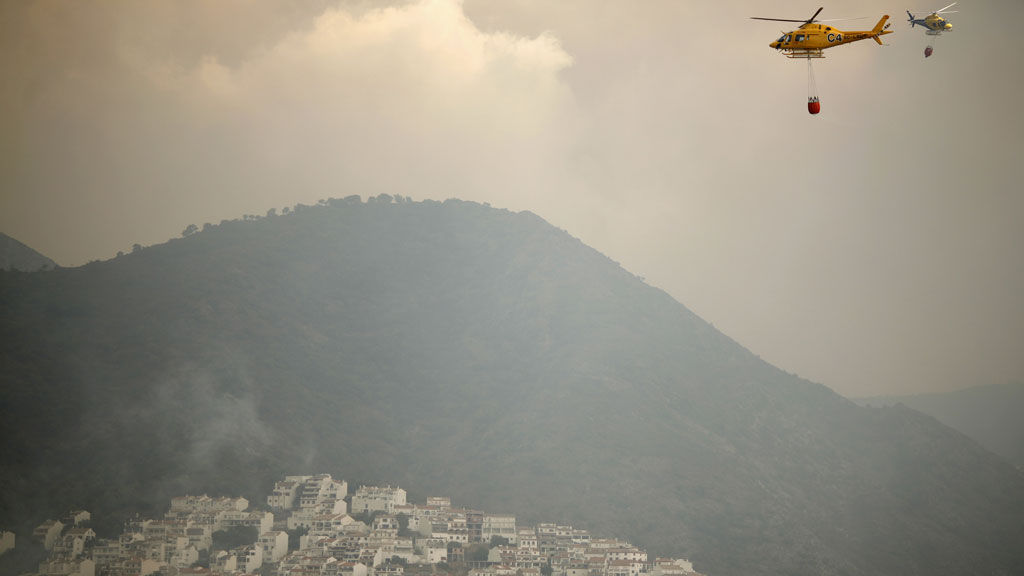
A large blaze is taking place at a recycling plant in Casares, Malaga. A huge amount of thick black smoke has been flying out of the building and can be seen from many areas of Costa del Sol. A strong smell of chemicals has also been reported in surrounding areas.

As of now, the cause of the blaze is unknown. The police and fire brigade are working now to prevent the fire from reaching all parts of the complex. Three aircraft, and a helicopter have been dispatched to assist the teams on the ground. The site is the largest of its kind in western Costa del Sol.


Saturday, June 28, 2014

Suspected British Drug Dealer Held In Spain

Posted On Saturday, June 28, 2014 0 comments

Suspected British Drug Dealer Held In Spain Christopher Mealey, who is wanted in the UK as part of a probe into an alleged £25 million-a-year cocaine ring, has been arrested by armed Spanish National Police in Marbella, on the Costa del Sol on Monday night. Officers from the National Crime Agency and the Metropolitan Police were also involved in the arrest of the 38-year-old. Mealey has been on the run for two and a half years after police raided a drugs operation, he ran with his father-in-law in January 2012, and now faces extradition to Britain.


Tuesday, February 19, 2013

Bolivia nationalized the company that runs the three largest airports in Bolivia because the government claims the company did not invest in improving the airports.

Posted On Tuesday, February 19, 2013 0 comments

Servicios de Aeropuertos Bollivianos SA (Sabsa) is a division of Spain's Abertis Infraestructure SA but Sabsa is also partly owned by Aena Aeropuertos SA based in Madrid. Bolivian president Evo Morales said that the privatization of Sabsa in 1997 was equivalent to "robbery" and "looting". He claimed that since that time the company's profits have been exorbitant and investments "ridiculous".


real estate company Reyal Urbis filed for insolvency after failing to renegotiate debt with its creditors.

Posted On Tuesday, February 19, 2013 0 comments

Spain's property market crash claimed another victim on Tuesday, as real estate company Reyal Urbis filed for insolvency after failing to renegotiate debt with its creditors.


The move takes the property developer, which had 3.6 billion euros ($4.8 billion) of debt at the end of September, closer to becoming Spain's second-largest bankruptcy after Martinsa Fadesa, which defaulted on 7 billion euros of debt in 2008.

Dozens of property companies have collapsed in Spain, where house prices have fallen around 40 percent since their 2007 peak. With the country locked in a deep recession, analysts expect prices to fall further still.

Spain's banks were crippled by the property market bust, eventually requiring the state to agree a European bailout for its lenders of almost 40 billion euros last year. Indebted property firms have asked banks for debt relief but patience is wearing thin among lenders saddled with soured property assets.


Reyal Urbis is 70 percent owned by construction magnate Rafael Santamaria and its creditors include Santander, BBVA, Bankia and Banco Popular.

The company, which valued its property portfolio at 4.2 billion euros in June 2012, said it would continue to operate as permitted by Spanish insolvency laws.

Its insolvency petition now goes to court and its fate will be in the hands of a judge.

Reyal Urbis said Santamaria would remain at the helm of the company and he still hoped Reyal Urbis could reach a deal with its creditors, given "the good will of all negotiating parties".

The company had until Feb. 23 to reach a debt restructuring deal with the banks or file for insolvency. Sources close to the matter told Reuters on Friday that creditors had rejected the company's 3.6-billion-euro proposal.

Trading in the company's shares was suspended on Tuesday, Spain's stock market regulator said. The stock had plunged 99 percent since June 2007 to close at 0.124 euros on Monday.

At the end of 2011, Reyal Urbis owned some 888 finished homes in a country where over a million homes lie empty. The company also had 8 million square metres of land for development and 237,000 square metres of commercial property, including offices, shopping centres, industrial property and hotels.


Friday, February 15, 2013

TODAY'S AFFIRMATIONS

Posted On Friday, February 15, 2013 0 comments


I am 100% worthy of living an amazing life!


I accept the BEST that life has to offer me!


I am worth my own Love and affection!


Thursday, February 14, 2013

Europol says it has dismantled one of the most efficient cybercrime organizations, led by six Russians, two Ukrainians and two Georgians.

Posted On Thursday, February 14, 2013 0 comments

Headquartered in Spain, the cybercrime network had been extorting millions of euros from online users across Europe by persuading them to pay ‘police’ fines for visiting banned web sites. It locked a user’s computer, and sent a message in the form of a fake police warning, demanding 100 euros to unlock it.

The criminals earned $1.35 million annually.


Sunday, September 23, 2012

Spanish city without medicine

Posted On Sunday, September 23, 2012 0 comments

The Spanish regions are heavily in debt. People rely on them for free health and education, but they can no longer pay their bills - and they can't expect much help from central government, as it too struggles under a huge financial burden.

You always know if an interview is going to be fun if the interviewee has a sharp, diagonal fringe.

Paula, the pharmacist, has such a fringe, and a grin that suggests she not only understands English but could crack a few jokes in it. But she chooses to speak in Spanish. Because what is happening in Valencia is no fun.

The sign on the wall tells the story. "Important information. The government of Valencia owe this pharmacy for all the medicine we have dispensed to you in January, February, March, April and May".

We are down to our last packs of insulin - we just have no money to buy the stock”

PaolaPharmacist

And not just this pharmacy. The government of Valencia - which runs the health system - owes a grand total of half a billion euros to the region's pharmacies.

Paula guides me into that back room that exists in all pharmacies, where the prescription drugs are kept. The problem is, now, there are not many drugs left.

"Look, this drawer is usually full," she says, pointing to where the suppositories are kept. Now there are only two packets."

She opens the fridge. "Look," she says, "we are down to our last packs of insulin. We just have no money to buy the stock."

I ask: "What happens if several people come in on the same day for insulin?" She makes two fingers walk along the back of her wrist. "They have to go around the neighbourhood to see if anybody else has it. It is the same with drugs for heart disease, stroke, anti-retrovirals."

It is an ordinary pharmacy: clean, white, with the regulation green neon cross outside. Now quite a lot of the patients are having to do something which for them is extraordinary: they are having to pay - a bit - for their medicines. There is a sign on the door explaining the new charges.

The Spanish regions have an extraordinary problem. During the property boom which has now busted Spain, they were collecting some taxes - from, yes, property.

Now that source of revenue is gone, they are expecting the central government to provide them with the cash they need. But the central government is in trouble too: it cannot borrow - except at punitive rates.

Valencia is littered with vanity projects that tell their own story”

The regions cannot borrow either. Valencia's deep in debt and who does pharmacist Paula blame? She smiles bitterly. "That is a very hard question to answer," she says.

In the baking heat outside Valencia's cathedral, there are people who do not find that question hard at all. They are holding up a banner: "The Route of Waste".

Journalists sacked when a local paper closed have taken to doing "citizen journalism" - which today means organising a coach trip around all the various projects Valencia built in the good times.

There is the Formula One racetrack, which runs right through the city so the roads had to be redesigned. But the city has lost its Formula One race.

Grand Prix in Valencia

There is the America's Cup dock, with huge sheds for ocean-going yachts and a massive white control tower. But there is no more America's Cup racing in Valencia.

There is the Opera House, a cross between the one in Sydney and something you would imagine only in your more disturbed dreams - 400 million euros to build, 40 million a year to run - 15 performances a year.

"Yes I am proud of it," says Xabi, one of the tour guides. "Yes the architecture is spectacular. But I would rather have schools."

City of Arts in ValenciaThe opera house (right) is part of Valencia's "City of Arts and Sciences"
Whether by corruption - and there has been a great deal of that - maladministration, or pure bad luck, Valencia is littered with vanity projects that tell their own story.

The airport that has never seen a single plane land. The theme park built in a place where the summer heat rises above 40C (104F). The land bought at premium prices that is now worthless.

The local press were also on the coach trip. And the next day I find out what they were working on. Headlines about me! They say the BBC's "star economics expert" - thanks for the compliment, guys - has come to Valencia to (here is the subtext) pour scorn on their wonderful infrastructure projects. The story makes the regional daily and thenational conservative daily ABC.

And not only that. There are now angry demands in the official weekly press conference of the government: Why are the BBC here? Have you given them an interview? Will you give us an interview about what you told them in their interview?

"It is Spain," sighs the financial controller of Valencia.

Yes, Spain - where the arrival of the foreign media is a juicy story for the local papers but where massive white elephant projects went unquestioned for a decade, and where the banks that funded them, boards stuffed with appointed politicians, have now gone bust. And where if you need some insulin from the health service, you had better hope you are the first in the queue.


Saturday, September 08, 2012

Police have several leads in the investigation of the large forest fire that started a week ago.

Posted On Saturday, September 08, 2012 0 comments

Suspicions that it was started malicously has possibly strengthened. Sources claim that the fire spread quickly because there was more than one fire. Witnesses stated inter alia, have seen an unidentified jeep coming from a farm between Ojén and Marbella exactly where the fire then got an awesome course. In Marbella, it was announced yesterday that it is now able to restore electricity, water and telephone networks in all affected areas. It is now under the companies just the kind of disruption that is "normal". In areas Elviria Ricmar has repaired water pipes, power lines and 3000 meters telephone and fiber optic cable. It has also been launched several campaigns to restore nature and conduct tree plantings. Biologists say that tree planting may be necessary until next year. The hotel chain Fuerte Hoteles has among other things promised to donate a tree for every hotel guest you have in Marbella. The hotels have also started a fundraiser where guests can help by buying a tree, which will then be planted in the affected area.


Friday, September 07, 2012

experts believe we can actually become "addicted" to stress.

Posted On Friday, September 07, 2012 0 comments

Stress can be physical,And then there’s the kind that’s in our heads — that OMG I’m so overwhelmed right now feeling. While psychological stress has some definite downsides (chronic freak-outs may increase our risk for cancer and other diseases), take a moment to exhale. In moderate amounts, stress can boost our focus, energy, and even our powers of intuition.

Still, in some cases, stress does more than light a productivity-boosting fire under our butts. Both emotional and physical stress activate our central nervous system, causing a “natural high,” says Concordia University neuroscientist and addiction specialist Jim Pfaus. “By activating our arousal and attention systems,” Pfaus says, “stressors can also wake up the neural circuitry underlying wanting and craving — just like drugs do.”

This may be why, experts believe, some of us come to like stress a little too much.

Type A and Type D personalities — or people prone to competitiveness, anxiety, and depression — may be most likely to get a high from stressful situations, says stress management specialist Debbie Mandel. Stress “addicts,” Mandel says, “may also be using endless to-do lists to avoid less-easy-to-itemize problems — feelings of inadequacy, family conflicts, or other unresolved personal issues.”

Some stress junkies have difficulty listening to others, concentrating, and even sleeping because they can’t put tomorrow’s agenda out of their minds, explains Mandel. Others tend to use exaggerated vocabulary — craaazy busy right now, workload’s insane!! And some begin to feel anxious at the mere thought of slowing down their schedule.

But psychologist and addiction researcher Stanton Peele cautions against labeling anyone a stress addict. “Only when that pursuit of stress has a significant negative impact on your life could it qualify as addiction,” he said, adding that many people are able to effectively manage — and in fact thrive under — high stress conditions. (Think: Olympic athletes or President Obama.)

 Study: Stress Shrinks the Brain and Lowers Our Ability to Cope with Adversity

For budding stress “addicts” or for those who just, well, feel overwhelmed, here are some tips to dial down that anxiety:

  • Seek professional help if you’re verging on burnout. (Not only can hashing it out with a therapist take a load off your mind. Some studies suggest it also boosts physical fitness.)
  • Do something creative. Mandel recommends carving out a once-weekly time not to think about tomorrow’s agenda by painting, cooking, writing, dancing, or anything else that’ll take you off the clock temporarily.
  • Take it outside. Numerous studies show spending time in nature improves general well-being, lowers anxiety, stress and depression, and even boosts self-confidence. Especially for women. (As it turns out, most addiction recovery centers offer outdoor-immersion programs.)
  • Calm down quickly. If you really don’t have time for any of the above, these 40 tricks to chill take five minutes or less.

Some of us may seek out stress a bit more excessively than others and struggle to just relax. It takes skill to handle hectic agendas and long lists of responsibilities — without losing sleep or feeling frazzled. So try these tips and try not to freak out.

Worried that you or someone you know seeks out stress a little too much? Think stress addiction is a myth? Tell us about it in the comments section below.


For those red wine drinkers who’ve been feeling morally superior about all the health benefits of the relaxing glass or two sipped during dinner, there’s some bad news on the horizon.

Posted On Friday, September 07, 2012 0 comments

 Turns out, those glasses of wine would be a lot healthier if they were non-alcoholic, a new study shows.  Spanish researchers led by Gemma Chiva-Blanch of the University of Barcelona found that non-alcoholic red wine reduced blood pressure in men at high risk for heart disease better than standard red wine or gin, according to the study published in the American Heart Association journal Circulation Research. Although the reduction in both systolic and diastolic blood pressure was modest, decreases of just 4 and 2 mm Hg have been associated with a 14 to 20 percent reduction in heart disease and stroke, the researchers pointed out. “The daily consumption of dealcoholized red wine could be useful for the prevention of low to moderate hypertension,” they concluded.  Although there have been many studies on the impact of moderate drinking on health, the findings have been mixed, with some studies showing a benefit and others suggesting none. The new study found that 3 ounces of gin a day had no impact on blood pressure, while consumption of regular red wine led to a small, but not statistically significant, improvement. The new study suggests that if you’re going to have a drink, red wine would be the healthiest choice, said Dr. Kelly Anne Spratt, a heart disease prevention specialist and a clinical associate professor of medicine at the University of Pennsylvania. Still, Spratt said, “while there are those of us in cardiology who believe in the benefits of red wine, we want to be wary. We’re not going like gangbusters recommending people go out and start drinking. There are a lot of problems associated with drinking, like weight gain, cardiomyopathy, alcoholism, an increased breast cancer risk in women who consume two or more drinks a day.” Chiva-Blanch and her colleagues suspect that blood pressure improvements were due to the impact of polyphenols, a red wine component, on nitric oxide. The theory is that nitric oxide molecules help blood vessels relax, which allows better flow and more blood to reach the heart and other organs. For the new study, Chiva-Blanch and her colleagues followed 67 men with diabetes or three or more cardiovascular risk factors. During the study, the men were all required to consume the same foods along with one of three drinks: 10 ounces of red wine, 10 ounces of non-alcoholic red wine or 3 ounces of gin. During the 12 week study, the men tried each diet/beverage combination for four weeks at a time. The researchers determined that the standard red wine and its nonalcoholic counterpart contained equal amounts of polyphenols, an antioxidant which has been shown to decrease blood pressure. Men who drank regular red wine saw minor reductions in blood pressure – too small, in fact, to be statistically significant. Those who drank gin with their meals saw no change in blood pressure. But men who drank non-alcoholic red wine saw a blood pressure decrease of about 6 mm Hg in systolic and 2 mm Hg in diastolic blood pressure. Chiva-Blanch and her colleagues concluded that their findings show that the alcohol in red wine actually weakens its ability to lower blood pressure.


Sunday, September 02, 2012

Marbella Forest Fire

Posted On Sunday, September 02, 2012 0 comments


new front opens up in southern Spain's Juanar area, as reports about a possible British casualty are conflicted.

Posted On Sunday, September 02, 2012 0 comments

While Marbella's wildfires are under control, a new front opens up in southern Spain's Juanar area. Meanwhile there are conflicting reports about whether there are any British casualties.

The flames reached the area of Juanar with "great virulence," Spanish newspaper El Pais reportedciting Manuel Marmolejo, chief of the Málaga firefighting department. Two hotels were evacuated as a result.

While fires were still burning in the forests in the Malaga area, firefighters said they were in control of a wildfire threatening villages outside of the beach resort of Marbella on Saturday. About 4,000 evacuees from southern Spain's Costa del Sol area started returning to their homes and hotels in the main residential areas today.

An estimated 300 British ex-patriots were among the evacuees.

Charred body found

One Marbella couple in their late fifties was reportedly hospitalised with burns to 60 per cent of their bodies and, in another incident, a mother and her two children were reported to have been found hiding inside a cave in Ojén and treated for smoke inhalation.

El Pais reported that the charred body of a 78-year-old British man was found in the area of Las Blanquillas, inside Ojén, and that his wife was still missing on Saturday. A spokesman for the Andalucia regional government said the body of the British man was found in a tool shed.

Despite the reports, Britain's Foreign & Commonwealth Office told Channel 4 News on Saturday that they had no official confirmation that a 78-year-old man or that any other British nationals died as a result of the wildfires.

Marbella blaze

The blaze began on Thursday and an estimated 1,000 hectares had been affected by Saturday. Hundreds of firefighters and members of the military fought the blaze overnight with helicopters and planes drenching the wildfires.

The blaze started in the hills above Marbella and was fanned by strong winds, unusually high temperatures and dry weather. Thousands were evacuated in the Canary Islands earlier in the summer and four died in fires in July in north-east Spain.

Britain's Foreign & Commonwealth Office deployed consular staff to the evacuation centres to assist British holidaymakers.


LinkWithin

Related Posts Plugin for WordPress, Blogger...